


Notes from the Undergrowth
One of the things I have always loved most is connecting science with art.
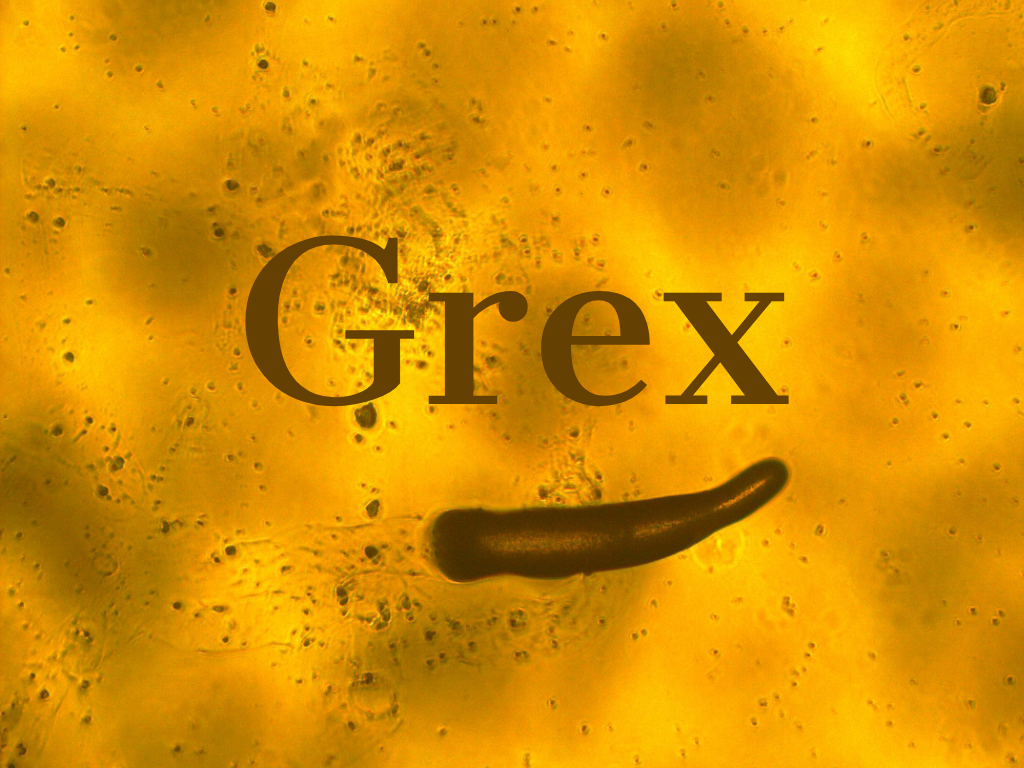
About twenty years ago, I recorded a series of videos of the slime mould Dictyostelium discoideum — tiny single-celled amoebae that, under stress and starvation, suddenly aggregate into a coordinated multicellular organism called a grex (or “slug”). Thousands of independent cells begin to communicate through chemical waves, flock together, migrate as one body, and eventually form a fruiting body that releases spores into the environment. When we added different substances into the agar, the behaviour of the cells changed slightly and the propagation of the waves could be influenced as well.
At that time, these videos were mainly scientific material for my diploma thesis and a few publications. Honestly, they then spent almost two decades forgotten in a drawer — although one of them became surprisingly quite popular on YouTube.
And today, suddenly, some of these old recordings have come alive again.
Pianist Hannah Watson Emmrich used them as the visual accompaniment for Grex, a beautiful composition by Joshua Borin, released today as part of Hannah’s debut album Notes from the Undergrowth.
Watching these old Dictyostelium recordings together with Hannah’s music was honestly a deeply emotional experience for me. I have seen these microscopy videos and wave patterns thousands of times before — but never like this. I am sure that Hana Ševčíková, my supervisor at the University of Chemistry and Technology Prague, who devoted many years of her life to slime mould research, would have been deeply moved too. Sadly, she passed away far too early. And I will also make sure that Marcus Hauser, my supervisor during my Erasmus stay at the University of Magdeburg, gets to see this video as well.
Science often generates hidden beauty long before we realise it may resonate far beyond the laboratory. And this is exactly why it is wonderful that collaborations like this can also be supported through COST networks. This video collaboration was created within the framework of COST Action CA22153 – European Curvature and Biology Network (EuroCurvoBioNet).
(And by coincidence: this July, the book Understanding Marvelous Patterns in Complex Systems edited by Stefan Muller will also be published — including my chapter about Dictyostelium. But more about that another time. For now: enjoy the music and the mesmerising behaviour of slime moulds.)
Thank you, Hannah, for choosing my Dictyostelium videos for your amazing debut album Notes from the Undergrowth — a fascinating musical ecosystem of piano miniatures inspired by the forest, nature, and its strange hidden details.
Jitka